quinta-feira, 1 de novembro de 2012

Bienvenidos a Bolivia-ita


We reached the border of Bolivia through La Quiaca and then took a supposedly 8h bus to Uyuni. The road was not paved and we though “hm.. that´s why this bus has jeep wheels and is much higher than usual ahaha”. At mid-night, the hour that we thought we would arrive, the first sights of what was going to be an adventure started. The bus was stopping a lot of times and no one could understand why. The answer came an hour later when the driver said “the engine is not working and a mechanic will arrive in 4 hours”. The bus stopped in the middle of the desert, without any heater and no sights of a nearby village. We were travelling with a French friend and a guy and a girl from Buenos Aires. 


At 4am, we woke up due to some guy that every 5m used to shout “puertaaaaa”, “vamossss”, “daleee”. What happen is that the bus ´windows were frozen and no news from the mechanic. At 6am, people started some fires outside to fight the cold that was invading the bus, and of course we went outside, the sky was amazing and so clear that the shooting starts were uncountable. The mechanic came at 7.30 but he could not fix the bus. We went back to the bus to sleep a bit more and wait for more news. Someone woke up us saying that the pick up outside would take us to Uyuni. We were 12 people in the car, 6 inside 6 outside, and 150km or 2hours away from Uyuni.
What was seen as a sign of “in 2hour we are eating our llama meat”, ended up in 4 hours because the car had a flat tire after 30m and without battery later on.


In Uyuni, we did eat our tasty llama. The next day we did the Salar tour which ended up being really worth it. During the first day we could only see white, white and white horizon, salt everywhere except when we stopped in a cactus island. A cactus island in the middle of nowhere, very unusual!! The first night was in a salt hotel, halls and beds made of salt. The next two days were through the desert with lagoons, flamingos, volcanos, geysers, hot springs, amazing sightseers! (but did not have the same impact on us because we had visited Atacama desert in the past, which is very similar but on the other side of Andes). On the second day we met a Portuguese that recognized there was a Portuguese after hearing a typical Portuguese “cabraoo!”, that came out of  Murta´s mouth when an animal passed by his precious lunch meal.


Even though Uyuni took almost 30% of our budget here in Bolivia we could say that our experience in the Salar was amazing. We did the tour with very nice companies and with a very outgoing guide Mateo. We also started using the so well known Hojas de Coca or Coca´s Leafs and please Martim, look out for your two traveler’s children.

terça-feira, 23 de outubro de 2012

The last Mates in Argentina


Heading to the North of Argentina from Paraguay we had our first good surprise and had to stay one full day in Resistencia, in the region of the Chacos (one of the poorest provinces in Argentina), since we lost the bus at 8 a.m. The surprise was to know that this is South American capital of sculptures.  The city itself is full of monuments everywhere you look  to and it hosts the biannual “Bienal of Sculptures”. We had the opportunity to visit the place and can say that is just lovely.

After Resistencia we took the night bus to Tucumán where we had a contact on couchsurfing and went directly to the address informed. We spent 4 days with the most amazing family we could ever met. Dani, our contact, lives in the up floor of her parent´s house. The family is a very typical Argentinian family where the follow topics would never be off the table: Argentinian football, Maradona, Politics and the amazing country. Oh and almost forgetting the huge amount of delicious food served (please do not lose the Empanadas from Tucuman, and also Napolitanas). The city is the birthplace of Argentina, where the Indepencia was declared and the Casa de La Independencia is a place to be visited if you´re in town. There´s also a famous Christ to visited at the top of a Cerro where Francisco improved his skills on serving and preparing the Mate.  We left the city with strong feelings for the family that hosted us and was kind of hard to say goodbye. Anyway.


Cafayate was our next stop and just getting in town we met German a friend from Buenos Aires and we all stayed in a same hostel with a very nice garden outside. Cafayate is a small and charming Pueblo and we in the first day we took a tour through the Quebrada. Amazing views that cannot be captured in the follow photos.  Since Paulo was sick Murta had the mission to go with German to a very close and beautiful Waterfall.

Don’t forget trying the famous Locro, typical of the region.


From Cafayate we went to Salta where we stayed in another hostel still traveling with our friend from Buenos Aires and with a sick Paulo almost dying of fever. We walked around town and at night went out in a region full of bars and clubs. Once we were a little bit sick of big cities we stayed there for only 2 nights and went to Tilcara.

In Tilcara, another small and charming Pueblo, we met our friends from Salta (German from Buenos Aires and Julien from France) and together with other nice people from the hostel we made an asado at night.  In the next day we made a trekking to a Waterfall surrounded by stupendous views and mountains.


After Tilcara we went to Humahuaca the last Pueblo from this region called Quebrada de Humahuaca. This one has nothing in especial and we spent just one night there before going to our next country destination: Bolivia.


sexta-feira, 5 de outubro de 2012

Para que!? Paraguay!


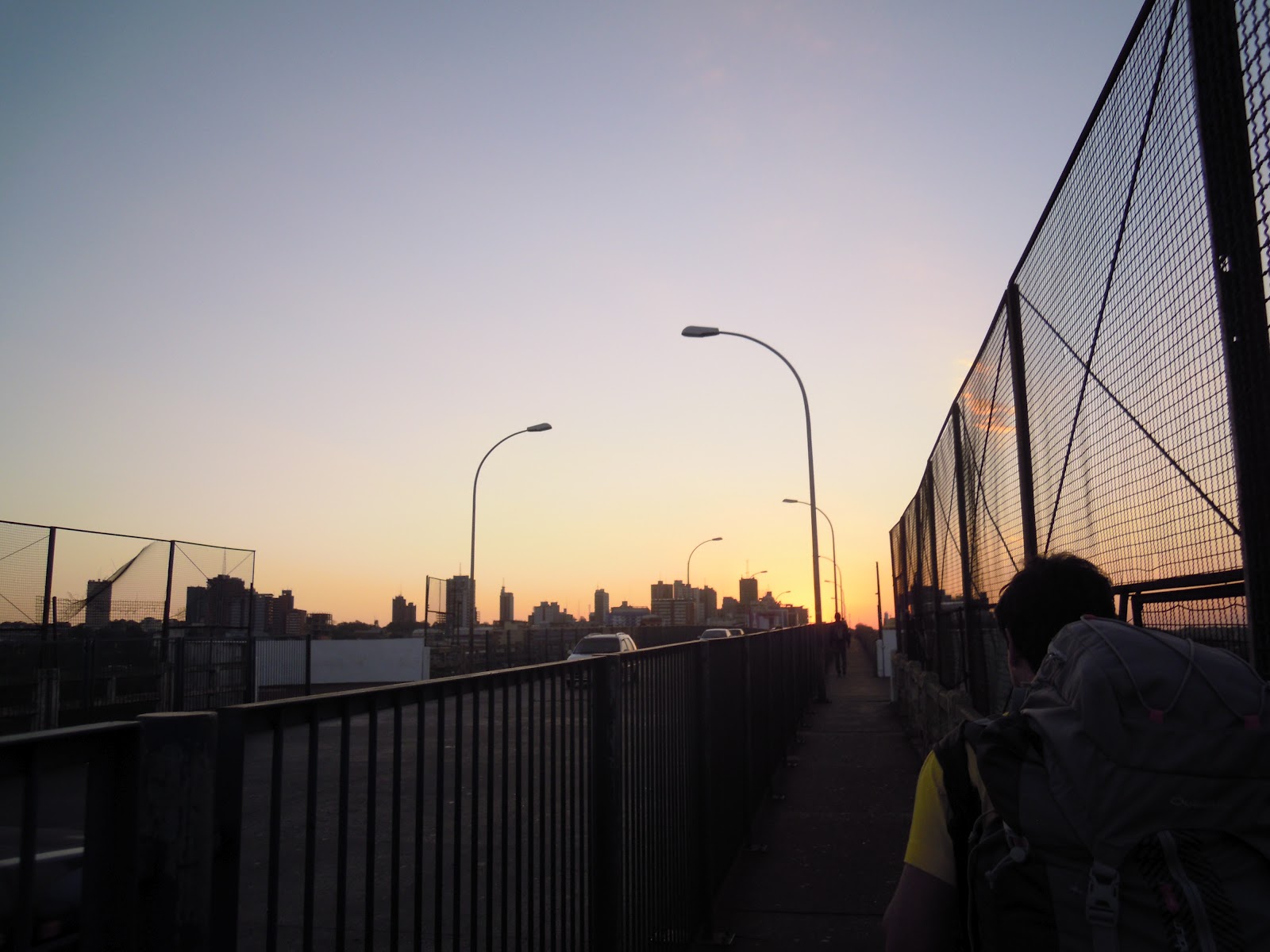
First hour in Paraguay was not what we expected ahaha. We crossed the border illegally and only noticed it in the bus terminal. We had to go back to the other side of the bridge, ask for a Brazilian stamp and them a Paraguayan stamp. This was done in a completely different environment than Foz do Iguaçu, here: more traffic, more mess, poorer. Economically speaking, Ciudad del Leste is a very important city in Paraguay, mostly because of its trade going on everywhere. Brazilian and Argentineans cross the border seeking for cheap technologic products, clothes or everything that could be bought for a good price when comparing to other countries. Paraguay has very low importation tariffs which turns the city into a Meca of shopping.


We took the bus to Encarnación, a small city that has the Jesuits´ ruins as its main touristic sight. We are so lucky that had the opportunity to see this ruins with local Paraguayans, one law professor and one tourist guide, so we ended up learning a lot from them. These ruins were built in 1706 by indigenous people that served the Jesuits. A lot of people claim they were slaves but others argue that Jesuits helped them to maintain their own culture, meaning that they worked for them but let them keep their language (Guarani – which is together with Spanish an official language and more talked in the streets) and taught them how to adapt/integrate the occidental society that Spanishs were bringing. The Jesuits did not last for long time (about 60 years) because they became a threat for the Spanish as having a lot of influence over the Indigenous.


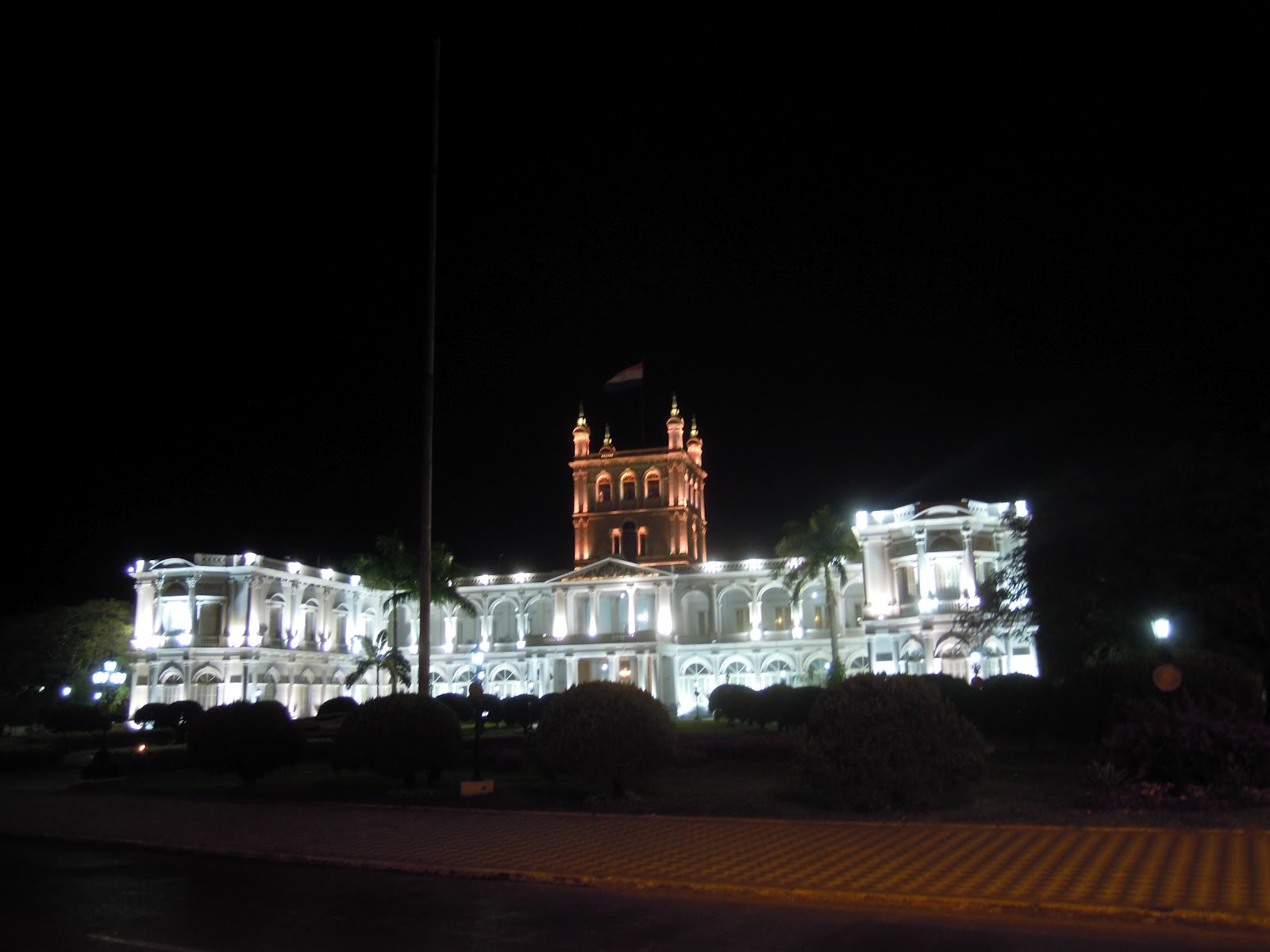
In Asuncion, we were first surprised by the amount of the private and public security guards carrying big weapons in Plazas and in front of financial institutions. Despite all this we felt very safe walking around the city even though we had the biggest shantytown just behind the hostel where we were staying. The city has countless charming old houses and buildings, most of them decayed or in process of restoration.

Paraguay resulted to be such a different country that is hard to describe it in one post. They were the most developed country until 1864 when Brazil, Argentina and Uruguay financed by England committed a genocide killing about 300.000 Paraguayans in the called War of the Triple Alliance. Paraguay lost 26% of its territory in this war. It turned the country so down that today is considered, after Bolivia, the second poorest country in Latin America.
Our stay there was quick but we could see a very rural country, full of beautiful green sights that seem to be very natural and explored (the región of the Chacos up to the north still has indigenous tribes and a non-touristic Pantanal). However, we felt something weird there, unlike its neighbors Argentina and Brazil, Paraguayans are less friendly, shy and look less happy. People there are not helpful; it looked like they didn’t know anything about the city, “where is the center? or “ where are the museums?” were two questions that we asked several times without a proper answer. Our impression is that they are still recovering from many years of dictatorship and still a close country, without a tourism industry. Of course there are exceptions, while we were walking in the municipality market we stopped for a quick lunch (with mandioca) and had the opportunity to listen some local folkloric music.


We left the country with mix feelings. Is a country that is worth to be visited because it has history, has a lot of places to go (we missed the Chacos region) and has the indigenous people. But we don’t see ourselves living here.

quinta-feira, 27 de setembro de 2012

Uooowww Iguaçu


After a 20 hours bus from Rosario to Puerto Iguazu we finally reached our destiny. A little bit tired but still up for a walk through the city (more like a Pueblo) and enjoyed the wonderful view from the 3 countries divided by the rivers Parana and Iguacu. The weather was great and we were in for party after a long time. There we met a group of very nice Brazilians (that later invited for a churrasco) and indeed it was a funny night.


(Murta as a tourist)


Next day, waking up early in the morning and Paulo almost dead with a big hangover we went to the park to see the Cataratas. This place is worth to see, amazing! We had never seen such a power of the nature, the strength and continuous flow of water is difficult to explain, and the number of waterfalls is unexpected. As it was Sunday and a holiday in Argentina the park was quite busy and full of cameras all around which made us dizzy. But all the trails and paths in the park were very worth it to be visited.


On the evening we went to Foz do Iguacu, the Brazilian side of the Cataratas and as soon as we stepped the Brazilian land Murta start dancing as a child does when receives a new toy – Murta was smelling good food and some good sertenajo to dance. 


We were received by our friends from the club of Saturday night. We got in a Brazilian asado (churrasco) with a very nice group which quickly introduced us to everyone there. After this we went to our contact in the city, Murilo, a very nice guy who was awake until late waiting for us. We had a small conversation and then went to bed.
In the next day we woke up to visit the Cataratas but not without trying and remembering a Brazilian food. Found a free buffet for U$S 4 and the consequence was a disaster: eating the maximum we could. I must admit that after that we felt a little ashamed for our manners, especially Murta. We visited the park and got surprised; the Brazilian side is even more beautiful with some of the most beautiful panoramic sights we had ever seen. After spending a few hours feeling and admiring the hugeness of lots of waterfalls we went to a Bird´s Park just nearby, where we had the chance to walk with the birds passing by us in what would be a natural wild life. Paulo, as usual, was full of fear and hiding behind me from the biggest birds.


Obs: It looks like Paulo is near the bird but in fact he was 2 meters away

On Monday we visited the Itaipú Dam, the biggest in the world in annual energy generation, generating 94.7 TWh in 2008 and 91.6 TWh in 2009. It´s located on the border between Brazil and Paraguay and by the agreement 50% of the energy generated is sold to Brazil and the other 50% is sold to Paraguay. Also, the dam has around 3.000 workers, half of those Brazilians and the other half Paraguayans. It basically supplies 90% of the electricity consumed by Paraguay and 19% consumed by Brazil.


Versión